
When is the best time to commission a measured survey?

LA Surveyor, Colby McMillan
In the early stages of any construction or refurbishment project, having a clear and accurate understanding of the existing building is essential to informed decision making. In this article, Colby McMillan, Surveyor at LA Surveys, explores some of the key stages in a building's lifecycle where commissioning a measured building survey can provide significant value.
While measured surveys are most commonly associated with the design phase of a project, advances in laser scanning and digital modelling mean accurate survey data can support everything from project handovers and construction verification through to property management, lease planning and future redevelopment.
Measured building surveys aren't just worthwhile at the start of a project
A measured building survey provides an accurate representation of an existing building, capturing dimensions, layout and key structural features to create a reliable digital record of the asset. While many architects and designers commission surveys before developing proposals, this is only one of many situations where accurate survey data can prove invaluable.
From validating completed works and documenting strip out conditions to supporting leasing activities and creating digital twins for long term asset management, measured building surveys can provide benefits at multiple stages throughout a building's lifecycle.
We have highlighted below examples of some of the situations where the benefit of commissioning a survey may not be immediately obvious, but where the information captured can deliver substantial long term value.
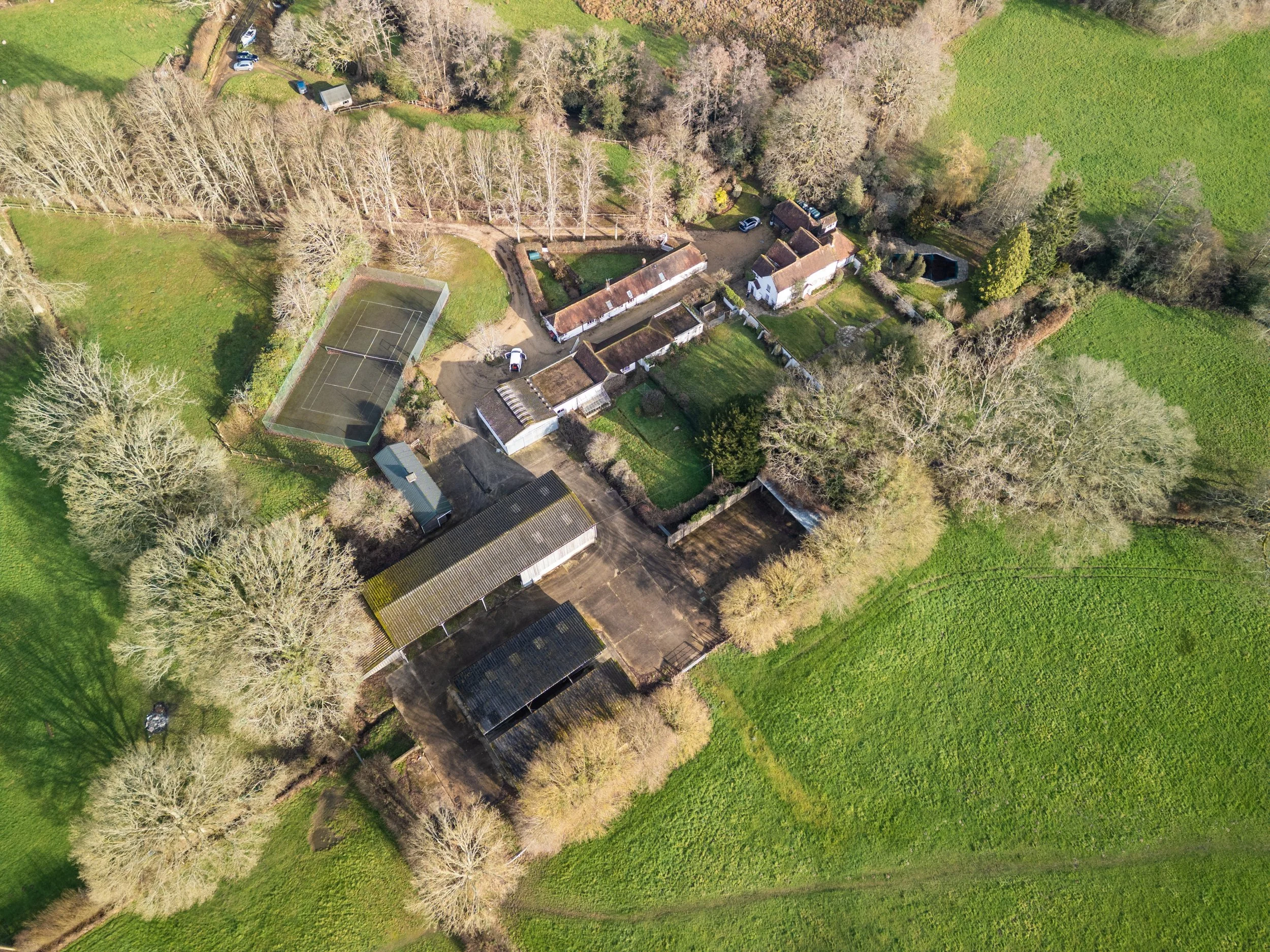
Measured surveys can be used to capture a full site pre-construction, but also any time thereafter.
1. Before planning an extension or refurbishment
The most common time to commission a measured building survey is before design work begins. Architects and engineers rely on accurate information about the existing building from which to develop proposals that are both practical and buildable. Even small discrepancies between drawings and reality can lead to costly redesigns, delays, or coordination issues later in the project.
Modern laser scanning technology allows the full 3d geometry of a building to be captured quickly and accurately, providing a reliable basis for floor plans, elevations, sections, and 3D models. At LA Surveys, our measured surveys are delivered with a guaranteed accuracy of ±10mm (although in reality we know they are better than that!), giving project teams confidence that critical design decisions are being made using dependable information from the outset.
2. Before purchasing, redeveloping or repurposing a building
For developers, investors, and property owners, understanding exactly what is being acquired can be just as important as understanding its location or planning potential. Existing drawings are often incomplete, outdated, or entirely unavailable, making it difficult to assess the true constraints and opportunities within a building.
A measured building survey provides a clear and accurate picture of the asset as it exists today, supporting feasibility studies, redevelopment proposals, change of use assessments, and investment decisions. Unlike surveys commissioned specifically for design development, the focus at this stage is on understanding the building itself, its size, layout, condition, limitations, and potential, before significant time or capital is committed.
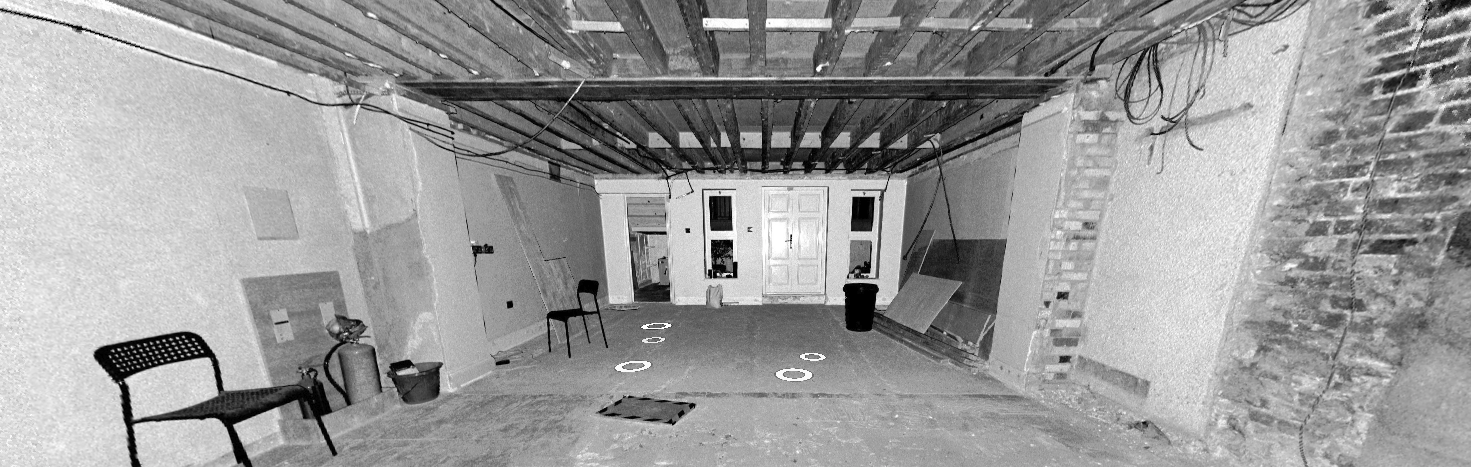
3. Following strip-out or demolition
One of the most overlooked opportunities to commission a survey is immediately following a strip out or partial demolition phase. Once ceilings, wall linings, and finishes have been removed, structural elements that were previously concealed become visible for the first time.
This can reveal valuable information about joist depths, structural arrangements, service routes, and wall build-ups that would otherwise remain hidden. Capturing this information before new construction begins allows design teams to make more informed decisions and often unlock opportunities to maximise ceiling heights, reduce wall thicknesses, or improve coordination between architectural and structural elements.
This approach proved particularly valuable on a project of ours in Kensington, where surveying the building following strip out works provided critical information about the existing structure that informed the subsequent design development. (See “How a Post Strip Out Survey Unlocked Additional Space at Kensington” Case Study)
4. During Construction
Measured surveys can also provide significant value during the construction phase itself. Buildings often behave differently once demolition and structural alterations begin, and site conditions can change rapidly as works progress.
Regular surveys during construction allow project teams to monitor movement, verify installed works, and identify potential issues before they escalate. In refurbishment projects, for example, the removal of supporting walls may reveal movement in previously stable structural elements, such as chimneys or masonry walls. Identifying these changes early enables informed decisions to be made while remedial options remain available.
This was particularly relevant on an LA London project in Notting Hill, where survey information provided valuable insight into the condition and behaviour of the structure as works progressed. (See “How a Rapid Structural Assessment Survey Prevented Costly Delays in Notting Hill Project” Case Study)

5. At project handover
A measured building survey can provide substantial value at the completion of a project by creating an accurate record of the final built condition. While contractors may produce as-built drawings, an independent survey provides a measurable and verifiable record of exactly what was actually delivered.
This information can prove invaluable if disputes arise in the future regarding workmanship, defects, or subsequent alterations. It establishes a clear baseline condition at the point of handover and helps define where one party's responsibility ends and another's begins.
As explored in our recent article on rescue projects, accurate records are often critical when responsibility transfers between different project teams. Having a comprehensive digital record of the completed works can significantly reduce uncertainty and provide a defensible reference point if issues emerge later. (See Journal Post “The Benefits of a Point Cloud Survey on Rescue Projects”)
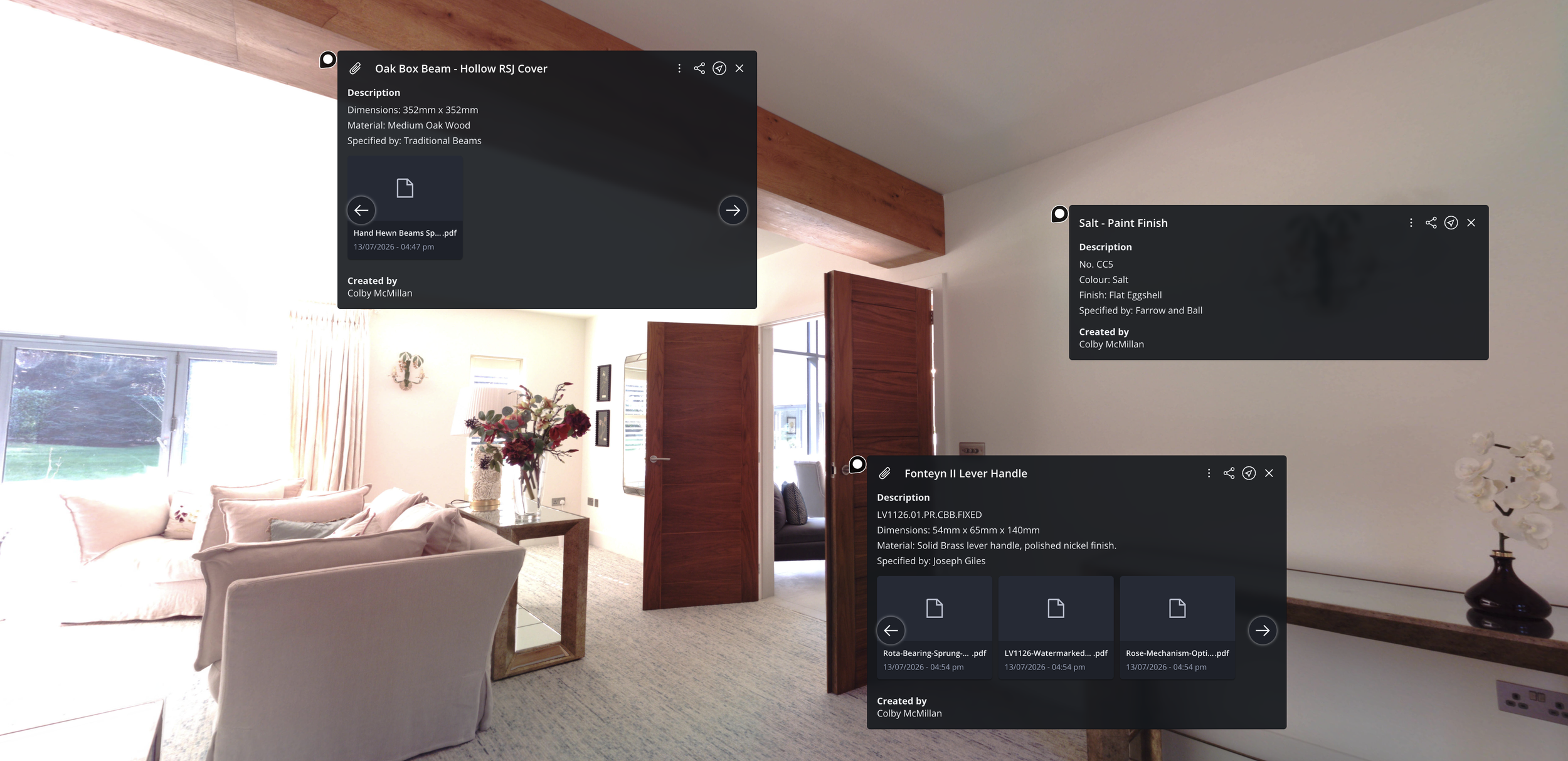
6. Supporting property management and leasing
The value of survey data extends far beyond the construction phase. For property managers, facilities teams, landlords, and asset owners, an accurate digital record of a building can become an important operational tool throughout the asset's lifecycle.
Survey information can be used to produce lease plans, Gross Internal Area (GIA) and Gross External Area (GEA) calculations, and retail zoning surveys. However, modern survey platforms also allow far richer information to be attached directly to the building data itself.
Using a platform such as SphereXG, materials, equipment specifications, maintenance information, dimensions, warranties, and asset data can be linked directly to locations within the point cloud. This creates a shared source of information that can be accessed by multiple stakeholders, reducing reliance on paper records and making building information significantly easier to manage over time.
For many property owners, the survey ultimately becomes far more than a set of drawings, it becomes a central repository of information about the asset itself. Indeed we at LA Surveys are actively pursuing recreating a project’s Operations & Maintenance Manual in this user-friendly, visual format.
7. Creating a digital record for future projects
Perhaps the greatest long-term benefit of commissioning a measured building survey is that the information continues to provide value long after the original project has been completed.
Buildings are rarely static. They are refurbished, reconfigured, maintained, extended, and adapted throughout their lifespan. Having access to accurate survey information means future project teams can begin work with a clear understanding of the building rather than relying on assumptions or commissioning entirely new surveys from scratch.
Whether supporting future refurbishments, assisting facilities management teams, informing redevelopment proposals, or forming the foundation of a digital twin strategy, survey data becomes a lasting asset that evolves alongside the building itself. Rather than viewing a measured building survey as a project cost, many building owners increasingly view it as an investment in the long-term management and future adaptability of their property.
Don’t forget…
Our 3D measured surveys are fast, reliable, and delivered with the rigour and insight that only architects can provide. LA Surveys delivers a premium and unique service.
To discuss a project or request a survey quotation, please contact us.